Potato Fibers

POTATO YARN IS A SUSTAINABLE SOLUTION FOR THE FASHION INDUSTRY

Potato Yarn is an innovative startup that turns potato harvest waste into a sustainable cotton-like fiber. Yes, you heard that right. Fibe did potatoes. This potato yarn groundbreaking material not only looks and feels like cotton but also aims to match its price point. Making it a viable alternative for the fashion industry.  The food used potatoes for breakfast lunch and dinner. But now, we are using potato harvest to create textile fabric.

Potato starch is often used in textile weaving as a sizing agent for wrapping cotton yarns. But, now potato plant stems can be used to extract fibers. These potato plant stem yarns may cut the fashion industry’s environmental footprint. Fabric made from potato fibers is the more sustainable alternative to pure cotton, as pressure grows on the fashion industry to reduce its environmental impact.⁠

Potato stem plant threads that are normally thrown away could be sustainable and good for controlling carbon footprint. However as an alternative to pure cotton.Potato stem fiber
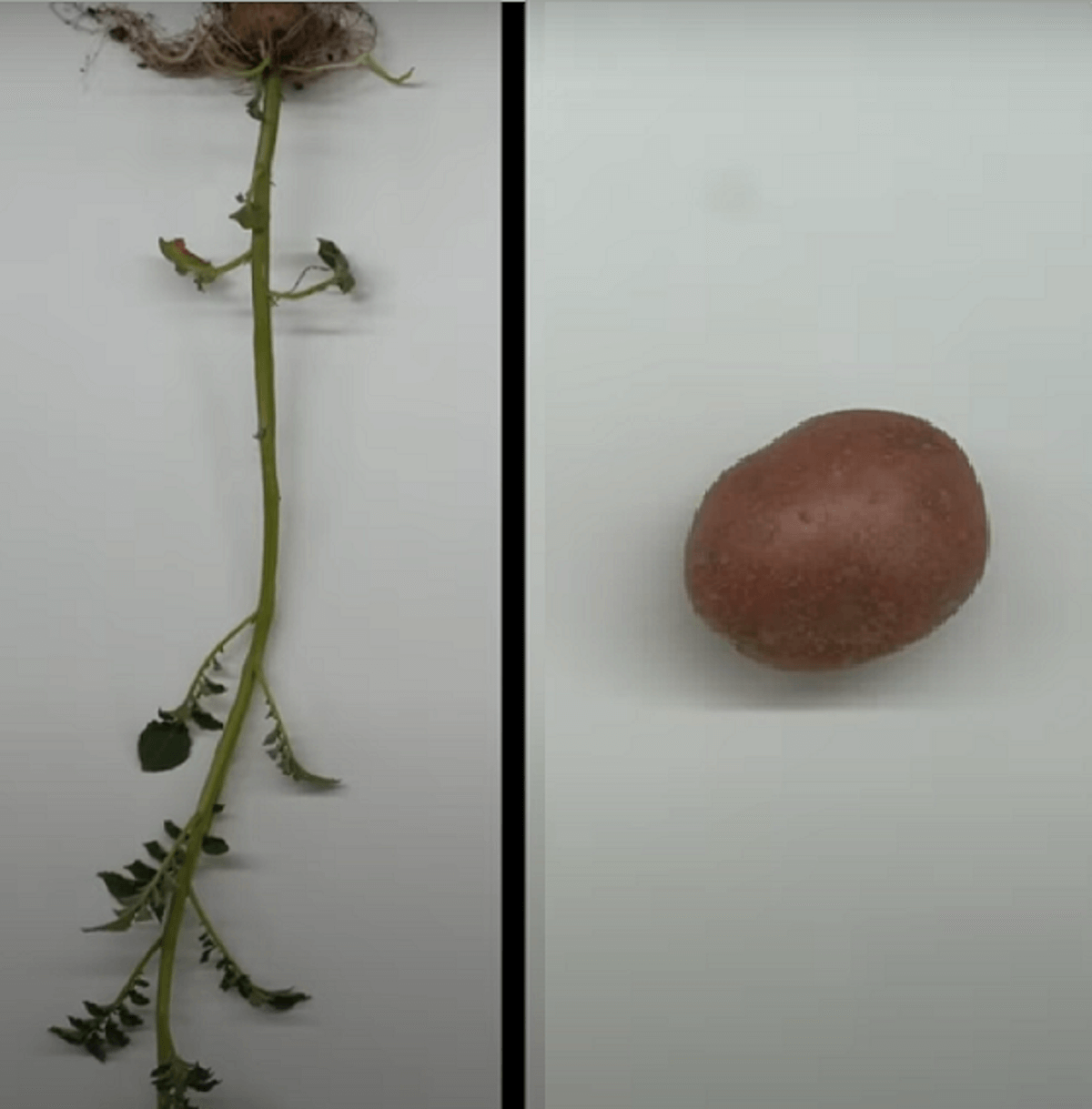
 Potatoes are harvested, and vegetables are uprooted to eat. However, the plant’s above-ground part( stems) contains poison solanine. So it can’t be used for animal feed. Further, this potato harvest part is usually thrown or farmers usually pulverize or incinerate.⁠ But it could be a sustainable alternative to pure cotton.
A UK-based start-up Fibe Company started to extract these potato stem fibers to make sustainable textile fabric.  The potato fibers are very similar in quality to cotton. In April, the world’s first potato-based threads, a blend of 25 percent potato and 75 percent cotton fibers. However, the land is already used to grow potatoes to eat. So potato fiber requires 99.7% less water and 82% less carbon emmosion as compared to cotton. Also, the properties of potato fiber yarn are similar to those of cotton yarn, making it a perfect sustainable alternative. Let’s hope in recent years the commercial use of this research for an eco-friendly and lesser textile carbon footprint fiber.

Leave a Comment

Your email address will not be published. Required fields are marked *

Scroll to Top